

How Inflation Affects Real Estate and Savings Stability
In times of economic instability, preserving the value of capital becomes the primary goal for every individual. Many investors and citizens naturally wonder how inflation affects real estate and whether purchasing residential or commercial space remains a safe haven for their hard-earned savings. History and economic data consistently show that paper money rapidly loses value during crises, while real assets successfully withstand market shocks.
Understanding this relationship is crucial for making smart financial decisions. When the general price level rises, traditional forms of savings become completely counterproductive, making property investment a logical choice. To accurately assess the entire process, we must analyze how macroeconomic shifts alter the behavior of buyers and sellers in the domestic market.
What Is Inflation and How Does It Devalue Money?
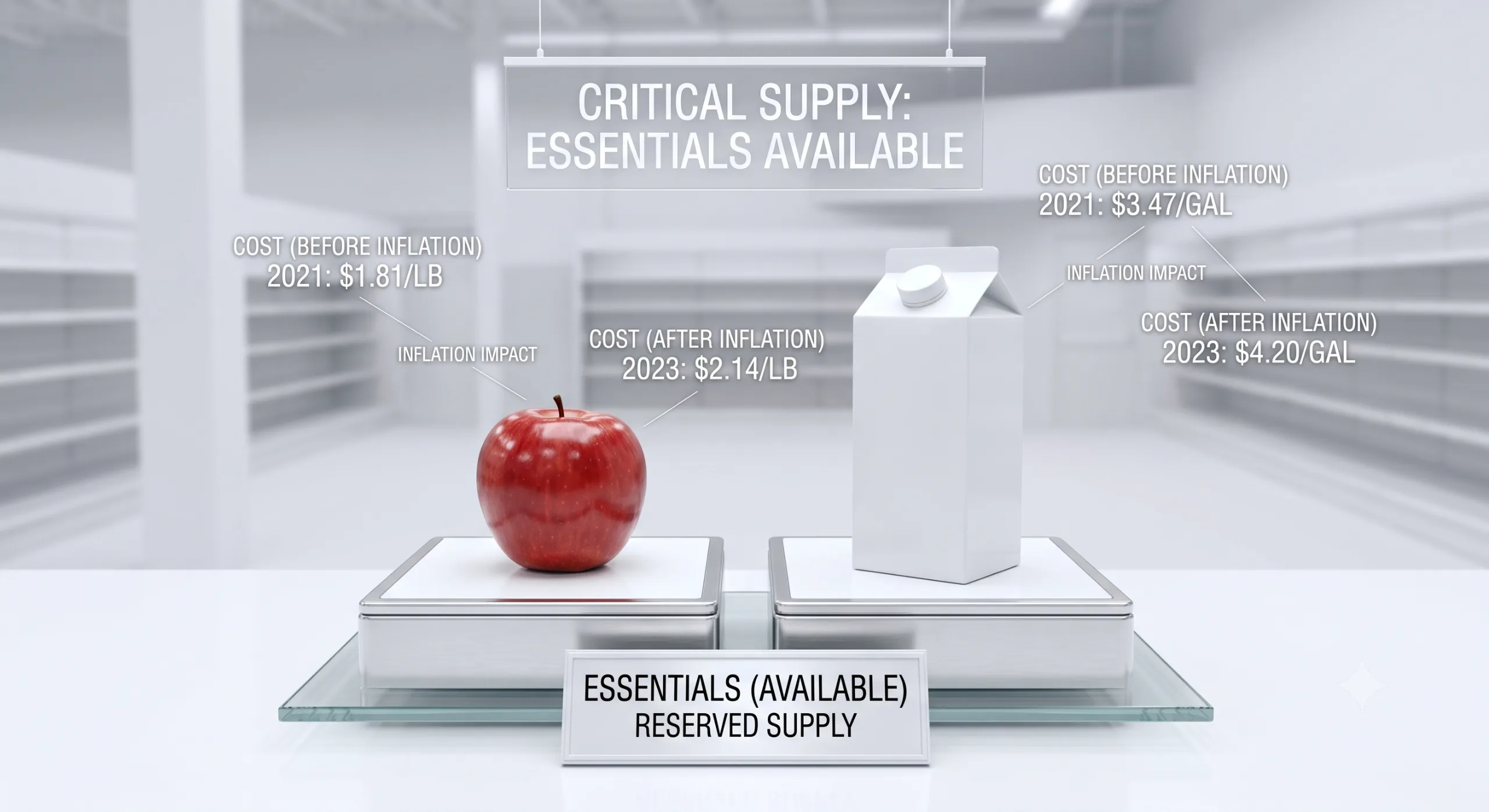
Inflation represents a continuous rise in the general price level of goods and services over a specific period. This economic process directly reduces the purchasing power of the money that citizens hold. This means that with the same amount of paper currency, you can now buy significantly fewer products than before. Defining price growth as a process that devalues savings highlights the clear gap between the value visible on paper and its actual, real-world value.
A practical example best illustrates this problem in everyday life. If the inflation rate is 13%, a product that used to cost 100 dinars will now cost 113 dinars. While the nominal value printed on the banknote remains unchanged, its real value plummets rapidly.
The psychological aspect of this phenomenon is also highly significant for investors. The subjective perception of high prices often outpaces official statistics, putting additional pressure on household budgets, as people notice that basic necessities are becoming more expensive faster than official reports suggest. This loss of purchasing power forces a change in savings strategies, because holding cash during inflationary periods is the worst option—the value of your money simply erodes.
Why It Is Vital to Invest Instead of Saving During Inflation
The critical question is how to preserve the value of hard-earned money while prices continuously climb. Keeping cash under the mattress is not a viable solution, as treating capital this way accelerates its devaluation. High rates of price increases make traditional cash savings entirely counterproductive for the owner. If we look at an inflation rate of 13.2%, a sum of 100,000 dinars will lose purchasing power equivalent to 13,200 dinars in just one year.
Active investing represents a proactive approach that enables the preservation and potential growth of asset value. Regular people often mistakenly believe that investment ventures are reserved exclusively for wealthy individuals with massive capital. The truth is that investing is not just for the rich—even with a few thousand euros, you can begin investing in various financial instruments.
Swift action is of paramount importance because every month of delay means an additional loss of your actual purchasing power. The sooner you invest, the sooner you halt the real melting of your money.
Detailed Analysis: How Inflation Affects Real Estate and Yields
When an inflationary wave hits the economy, its impact on the construction industry and the housing stock is twofold. On one hand, the costs of building materials, fuel, and labor rise drastically. Developers face more expensive projects, which directly impacts the supply of new properties on the market.
On the other hand, the demand for tangible assets surges. Buyers holding cash want to convert it into something physical as quickly as possible to prevent it from dissolving in bank accounts. As a result, property values rise, tracking the changes in the overall cost of living.
Investment Type in a Crisis | Market Impact and Specifics | Yield and Stability |
Small Residential Properties | React fastest to the crisis due to massive demand from small-scale investors. | High liquidity and constant rental demand. |
Energy-Efficient Buildings | Smart features (heat pumps) boost property attractiveness. | Protect both the owner and tenant from rising energy costs. |
Medium Residential Units | The most resilient segment, maintaining long-term stability. | Stable source of income and straightforward management. |
As the table illustrates, technical features and property structure directly dictate an asset's resilience to crises. Renovated properties with new utility installations and modern windows become highly sought after, as investors want to avoid unpredictable and expensive construction work when material prices fluctuate wildly on a month-to-month basis.
Real Estate – Stable Assets in Uncertain Times
Investing in bricks and mortar is a traditional method used to shield capital from the eroding value of fiat currency. This asset class possesses a tangible strength that does not depend directly on stock market fluctuations. Such investments yield a double benefit: long-term capital growth and a steady monthly cash flow. Owners can easily adjust rental prices to match the cost of living, ensuring a stable source of income despite inflation.
Buying apartments or houses is the most recognizable investment method in the Serbian market. Stable demand for living space makes residential real estate a reasonably safe sector for small-scale investors. This type of property offers simple management and steady demand, even during economic downturns. This is why many citizens opt for these assets when planning their first serious purchase for long-term savings.
However, for those seeking total diversification outside of this sector, other global options exist. To purchase quality international equities, investors often need a licensed stockbroker in Serbia. A strategy focused on resilient business models helps individuals maintain the stability of their portfolios, though this approach requires a detailed analysis of companies that can easily adapt to new market conditions.
Conclusion: Protect Your Capital Through Tangible Assets
Clearly, the answer to how inflation affects real estate lies in the property's ability to act as an "inflation hedge"—a shield against the devaluation of money. Active capital protection always delivers better results than passively watching your life savings slowly disappear. Analyze the market, focus on registered and functional properties, and make your move in time to secure a stable financial future.
More from Novi Kvadrat Editorial

High Speed Rail and Property Values: Top Growth Zones
The construction of modern transit hubs, expressways, and high-speed rail lines is fundamentally reshaping real estate market dynamics. Data tracking transit infrastructure confirms that high speed rail and property values move in tandem, converting formerly remote suburban pockets into highly sought-after residential and investment hotspots. Discover which micro-locations experience the steepest capital appreciation and how to invest strategically before infrastructure projects complete.

Micro-Location Real Estate: Why Street Prices Differ
Two apartments on the same street, with identical floor plans and square footage, can vary in price per square meter by up to 30%. Thorough analysis proves that micro-location real estate dynamics dictate this pricing gap. From floor level and traffic noise to sunlight exposure, views, and parking accessibility, hidden micro-environmental factors directly influence daily living comfort and long-term asset liquidity.
Creating an Additional Room: Smart Layout Guide 2026
A growing family, the need for a home office, or a simple desire for more privacy frequently raises a crucial question: how to gain new space without purchasing a larger property? The solution lies in creating an additional room through smart floor plan organization and minimal investment. From using light glass partitions and multi-purpose furniture to terrace adaptation, we reveal creative methods that will transform your home.